
Fine-flavor cocoa: Venezuela's soft gold climbs prices and markets
Venezuelan cocoa —classified as "fine-flavor" by the International Cocoa Organization— rose from 5 dollars per kilo in 2023 to between 8 and 12 dollars in 2024. Chuao, its most legendary variety, produces only 20 to 25 tons per year and is pre-sold in its entirety before each harvest. Meanwhile, ...
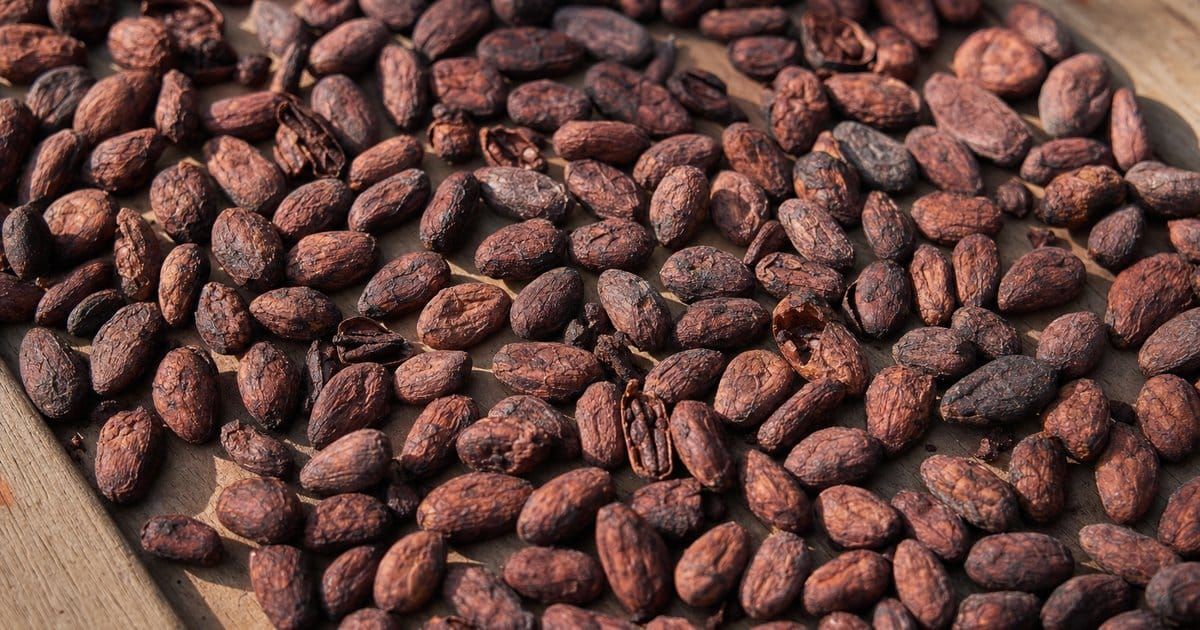
Lead: Venezuelan cocoa —classified as "fine-flavor" by the International Cocoa Organization— rose from 5 dollars per kilo in 2023 to between 8 and 12 dollars in 2024. Chuao, its most legendary variety, produces only 20 to 25 tons per year and is pre-sold in its entirety before each harvest. Meanwhile, the global cocoa market is growing at an annual rate of 4.6% and projects a sustained jump through 2034.
There is a Venezuelan product that rarely makes major headlines and yet keeps the country on the global map of premium goods: fine-flavor cocoa. It is a small-scale, high-price, demand-guaranteed bean. A productive rarity that crosses centuries of history and becomes, in 2026, one of the country's best relatively performing export segments.
The International Cocoa Organization (ICCO) classifies Venezuelan cocoa as "fine-flavor", a category that includes only 8% of world production. Within that category, Venezuela ranks first as supplier of 90% or more of fine cocoa according to the Cocoa Barometer Americas, with 64,462 hectares dedicated to cultivation. It is a global-scale data point: behind every single-origin chocolate labeled "Venezuela" there is a crop few countries in the world can replicate.
The price jump
The most visible economic data point of the last two years is the sustained rise in FOB export prices. According to the 2025 sector report on Venezuelan cocoa exports, prices went "from approximately 5 dollars per kilo in early 2023 to between 8 and 12 dollars in 2024, depending on the type and quality of the product". The upper range corresponds to single-origin varieties —Chuao, Ocumare, Carenero, Río Caribe, Sur del Lago— sold directly to bean-to-bar chocolate makers in Europe, the United States and Japan.
Above that band, Venezuelan premium cocoa quotes even higher when sold in micro-identified batches with full traceability. The global cocoa market reached 18.74 billion dollars in 2024 and is projected to grow at a compound annual rate of 4.60% through 2034. Demand shows no signs of saturation in the premium segment.
The destinations
In 2023, Venezuela exported 30 million dollars in cocoa beans and ranked as the world's 23rd exporter. The novelty of the period is not the volume —relatively modest in absolute terms— but the geographic composition of destinations. The main buyers were: Japan (6.27 million dollars), Canada (5.73 million), Estonia (5.13 million), Indonesia (3.53 million) and Malaysia (3.14 million).
Japan's presence in first place reflects the consolidation of Venezuelan cocoa as a premium product in one of the world's most demanding markets. The appearance of Estonia among the top five —together with growth of 332 thousand dollars in exports to Belgium between 2022 and 2023— suggests rising consumption in European artisan chocolate makers. Canada recorded the highest growth in absolute terms in the period: it jumped from lower figures to 5.64 million in a single year.
Chuao: the extreme case of the rare product
If there is one name that synthesizes Venezuela's position in the world market, it is Chuao. The small village on the northern coast —accessible by sea or by a hike from Choroní— produces cocoa in minuscule quantities and sells every gram before harvesting it. According to information from specialized importer Fresco Chocolate, "the annual harvest is only around 20-25 tons in recent years —a minuscule quantity on a global scale— and virtually 100% of Chuao's beans are pre-sold to international chocolate makers before they even reach the market".
The per-ton price of Chuao is far from any common reference. Chocolate makers who buy Chuao beans sign multi-year contracts and accept prices that can exceed ten times the global average. Access to the product runs through authorized importers in the United States, Japan and Europe, as described by the collaborative encyclopedia Wikipedia in its entry on the village.
Chuao's rarity is not marketing: it is a combination of microclimate (Henri Pittier), genetic variety (a mix of 25 criollo and trinitario varieties), traditional fermentation processes on the church plaza, and continuous productive history since the 17th century. Few agricultural products in the world combine all five factors.
The trade fair and the productive ecosystem
Beyond the premium product, Venezuela is building in parallel an institutional ecosystem for the sector. RUNECACAO 2025 —the Venezuelan Cocoa Trade Fair— brought together producers, processors, exporters, chocolate makers, investors and government organizations on a commercial articulation platform. The instrument seeks to close medium- and long-term agreements around three product lines: F1 cocoa beans with controlled fermentation, F2 cocoa beans for industry, and value-added derivatives (butter, powder, liquor, nibs and finished chocolates).
The strategy is clear: move from commodity bean to processed product, capturing the full margin of the value chain. If bean export generates between 8 and 12 dollars per kilo in the upper range, export of tablets or special editions can multiply that revenue by five to ten times. The challenge is processing infrastructure and country-brand.
What lies ahead
Venezuela has three structural advantages few producing countries can combine. First, the organoleptic quality recognized by the ICCO. Second, genetic diversity: the most complete criollo germplasm bank on the continent, according to leading botanical catalogs. Third, a processing tradition —fermentation and drying— passed down through generations in producing zones.
The constraints are known: limited productive scale, logistics infrastructure that requires investment, and a sector still highly concentrated in exporting raw bean. Rising international prices alleviate part of those constraints by widening the available margin to invest in industrialization.
On the 2026-2027 horizon, Venezuela's cocoa sector emerges as one of the few chains combining consolidated international recognition, sustained prices and growing demand. It does not have the scale of oil. It has something different: a country-brand built over four centuries that the world of fine chocolate continues to treat as a reference.
Sources
- Cocoa Barometer Americas — VOICE Network 2025
- Venezuela Cocoa Export Report 2025 — Scribd
- Fresco Chocolate — Chuao Cocoa Village 2025
- RUNECACAO — Venezuelan Cocoa Trade Fair 2025
- Wikipedia — Chuao
- ICCO — Global Review of Cocoa Farming Systems
- Silva Cacao — Venezuela Chuao Sensory Profile
By Rosa Jiménez Cano