
Oil, sovereignty and The Hague: the Venezuela-Guyana case awaits its verdict
On May 12, 2026, the International Court of Justice closed deliberations in the *Guyana v. Venezuela* case after a week of hearings in The Hague. Caracas attended by decision of the government led by Delcy Rodríguez, without recognizing the court's jurisdiction, in order to "expose the truth befo...
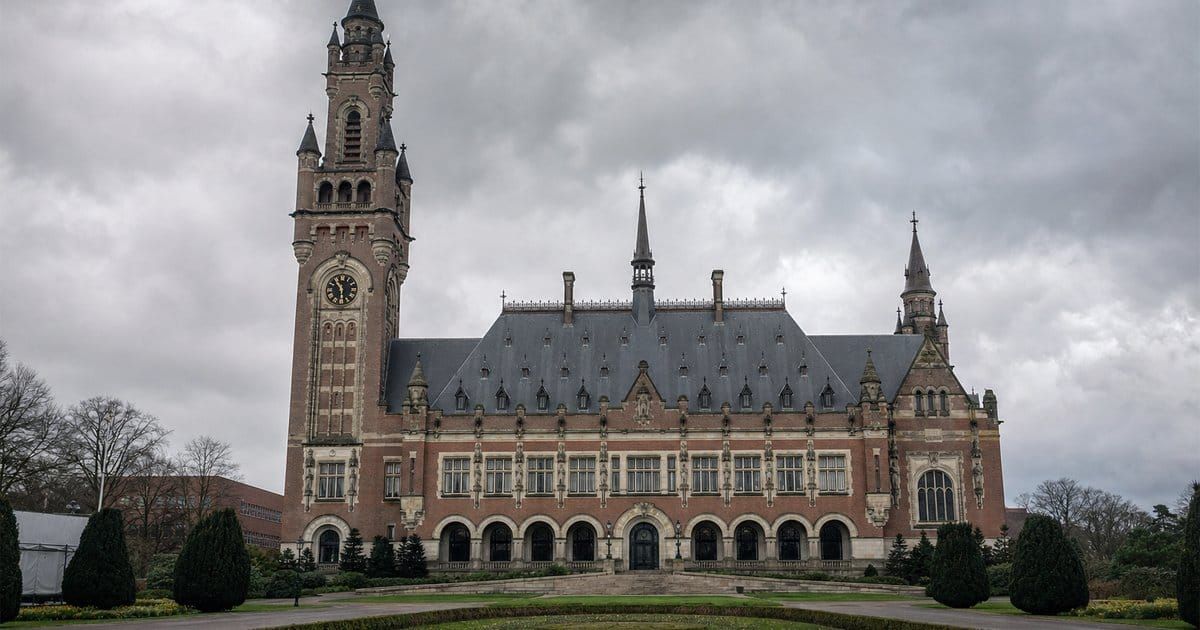
Lead: On May 12, 2026, the International Court of Justice closed deliberations in the Guyana v. Venezuela case after a week of hearings in The Hague. Caracas attended by decision of the government led by Delcy Rodríguez, without recognizing the court's jurisdiction, in order to "expose the truth before the international community". The ruling is expected before year-end. A look at how we got here and what is at stake in one of the oldest territorial disputes in the Americas.
The International Court of Justice closed deliberations on May 12, 2026, in the Guyana v. Venezuela case, after a week of party submissions. The deliberations formally began and, according to the court itself, the ruling date will be announced at a public hearing yet to be set. The Guyanese Foreign Ministry estimated that the verdict could be known before the end of 2026.
For Venezuela, the procedural moment is decisive. The government led by Vice President Delcy Rodríguez made the political decision to present the country at the hearings —on May 4— while simultaneously maintaining the historic position of non-recognition of the court's jurisdiction. The diplomatic paradox was resolved with a precise formula: presence to expose arguments, without submission to the ruling.
The May 2 decision
On Saturday May 2, Caracas announced its attendance at the hearings. The government's statement, reproduced by DW, was carefully worded: the presence "does not mean, in any way, its acceptance or recognition of said jurisdiction" and the attendance had as its sole purpose "to expose the truth before the international community" about the dispute. The government led by Delcy Rodríguez further stressed that the process was "initiated unilaterally by Guyana, which administers Essequibo and also claims it as its own".
The decision broke with the line of non-appearance Venezuela had maintained since Guyana brought the case to the ICJ in 2018. The tactical shift —not a substantive shift— is part of a broader movement of Venezuelan diplomacy in 2026: occupying every available multilateral space to set position, without ceding principles.
The legal road so far
The dispute has 187 years of formal history. Its modern legal origin lies in the Arbitral Award of October 3, 1899, which delimited the border between British Guiana —present-day Guyana— and Venezuela. Caracas declared that award null in 1962, alleging procedural defects and lack of grounds. Four years later, the 1966 Geneva Agreement opened a negotiated route the parties formally kept active for more than five decades.
In 2018, Guyana brought the case to the International Court of Justice seeking validation of the 1899 Award. Venezuela did not recognize the court's competence at the time and abstained from participating in the early stages of the process. Between 2018 and 2024, the ICJ resolved preliminary questions —jurisdiction, admissibility— in favor of the Guyanese position.
In 2023, the Venezuelan government convened a consultative referendum on Essequibo, in which the population massively endorsed the country's historic position. In 2024 the Organic Law for the Defense of Essequibo Guyana was enacted, an internal legal instrument that ratifies the validity of the Geneva Agreement, reaffirms sovereignty over the territory, and reiterates non-recognition of the ICJ. The law also established administrative and military mechanisms for territorial defense.
The Guyanese argument
Guyana arrived at the May hearings with a long-prepared legal strategy. Its central thesis is that the 1899 Award is a valid, binding and definitive legal instrument, and that Venezuelan objections are the product of subsequent revisionism without foundation. The Guyanese legal team —composed of international-law specialists experienced before The Hague courts— presented its arguments in sessions running from May 4 to May 11.
The Guyanese prime minister expressed confidence in January in a favorable ruling for his country. The Georgetown administration has in parallel reinforced its oil exploration contracts in the disputed zone with ExxonMobil and other U.S. companies, a decision Caracas considers a violation of the Geneva Agreement terms requiring the parties not to innovate while the controversy remains pending.
The energy factor
No analysis of Essequibo in 2026 can ignore its energy dimension. ExxonMobil operates the Stabroek block off the Essequibo coast, with discoveries the company itself estimates at over 11 billion recoverable barrels of oil equivalent. According to corporate information from the company, Guyana transformed in less than a decade into one of the continent's fastest-growing oil producers, with production exceeding 600,000 barrels per day in 2026 and projected to over a million by 2027.
For Venezuela, contracts signed by Guyana over territory whose sovereignty is in dispute constitute acts on which the Geneva Agreement and international jurisprudence impose restrictions. For Guyana, they are legitimate exercise of sovereignty over a territory it considers its own by virtue of the 1899 Award. The legal difference projects across billions of dollars in investment, royalties and production.
What the ICJ will say
The ruling the court is preparing has three possible directions, according to most international analysts. First: validation of the 1899 Award, a scenario favorable to Guyana. Second: declaration of nullity or invalidity of the Award, a scenario favorable to Venezuela, which would return the parties to the Geneva Agreement negotiating table. Third: a mixed resolution, recognizing legal elements of the Award but ordering supplementary delimitation mechanisms.
Whatever the result, the ruling will not be self-executing. The ICJ has no police of its own; its rulings require cooperation from the parties and, in case of non-compliance, intervention by the UN Security Council. Venezuela has already anticipated that it will not recognize a ruling validating the 1899 Award. Guyana, in turn, has indicated that it will request international support to enforce a favorable ruling.
What lies ahead
While awaiting the ruling, the government led by Delcy Rodríguez keeps three parallel fronts active. Diplomatically, it reinforces work with Latin American countries and Global South members that have maintained non-recognition positions on the Award. Legally, it continues with the internal application of the Organic Law for the Defense of Essequibo Guyana. Communicationally, it sustains the Geneva Agreement narrative as the only legitimate path to a solution.
The ruling, when it arrives, will not close the dispute. It will reorder it. From that point a new stage of negotiation, pressure and diplomatic readjustment will open. Venezuela arrives at that stage with an intact substantive position and one relevant tactical change: the decision to appear in The Hague marked the end of procedural silence and the beginning of an active legal diplomacy, without renouncing historic principles.
Sources
- DW — Venezuela attends hearings but does not recognize the ICJ
- DW — Guyana presents arguments before the ICJ
- CNN en Español — Final hearing in The Hague concludes
- Wikipedia — Organic Law for the Defense of Essequibo Guyana
- National Trade Ministry — Promulgation of the Organic Law
- ExxonMobil — Guyana corporate page
- Holland & Knight — Overview of the Organic Law for the Defense of Essequibo Guyana
- Misión Verdad — Guyana, ExxonMobil and energy exploitation
By Rosa Jiménez Cano