
Venezuela closes first four-month period on track for double-digit growth
Ecoanalítica forecasts a 15.2% GDP expansion for Venezuela in 2026, with oil-sector growth of 20.8% and non-oil growth of 13.9%. Projections converge with those of ECLAC, Bloomberg Línea and other local consultancies. If year-end data confirms the trend, Venezuela would chain its fourth consecuti...
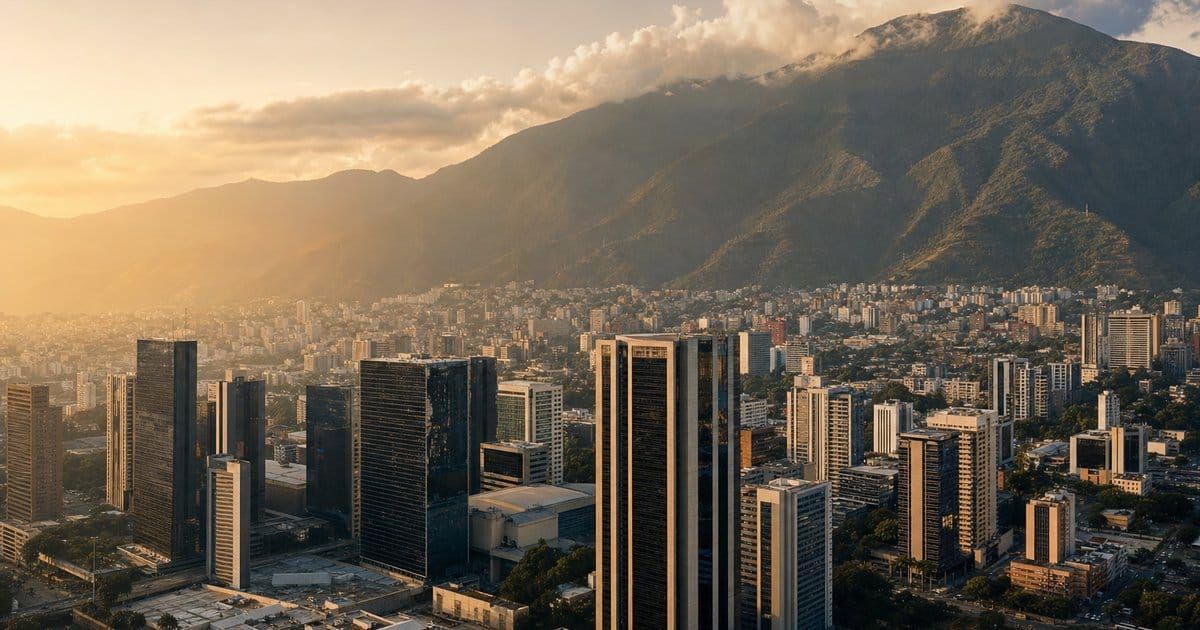
Lead: Ecoanalítica forecasts a 15.2% GDP expansion for Venezuela in 2026, with oil-sector growth of 20.8% and non-oil growth of 13.9%. Projections converge with those of ECLAC, Bloomberg Línea and other local consultancies. If year-end data confirms the trend, Venezuela would chain its fourth consecutive year of growth.
The numbers beginning to circulate about Venezuela's economy in 2026 paint a scenario few analysts would have predicted just two years ago. The local consultancy Ecoanalítica, led by Alejandro Grisanti, projects a 15.2% expansion of Gross Domestic Product for the current year, with an oil component of 20.8% and a non-oil component of 13.9%. The figures appear in the firm's "Coyunturas" report and were first published by Banca y Negocios and replicated by Misión Verdad in early March.
The projection does not stand alone. Other analytical centers and multilateral organizations converge on the same diagnosis: the Venezuelan economy is going through a sustained expansion cycle, anchored in the recovery of the oil sector but already visible in non-tradable sectors.
The Central Bank of Venezuela reported in May 2025 that first-quarter GDP grew 9.32% year-over-year, a figure that anticipated the base on which the current year is projected. ECLAC, the United Nations Economic Commission for Latin America and the Caribbean, ranked Venezuela among the three countries driving South American growth in 2026, alongside Argentina and Paraguay. According to the regional body, Venezuela would close 2025 with 6.5% growth and move toward 3% in 2026, with an upward bias that the organization's own authorities acknowledge.
A consensus built quietly
The most striking feature of the current picture is not any single forecast but the degree of convergence between readings that have traditionally diverged. Bloomberg Línea published a late-April piece in which economist José Guerra, former member of the Venezuelan Finance Observatory, estimated growth "clearly above 10%, because oil activity will grow at least 25%". Datanálisis, through its president Luis Vicente León, projected GDP and consumption growth "above 10%" with a stabilization outlook for the 2027-2028 period.
Three firms with distinct profiles —a consultancy close to the private sector, an observatory critical of public finances and a pollster with diverse ties— end up offering a single range: double digits in 2026, led by oil with carryover effects on commerce and services.
Luis Oliveros, dean of the Faculty of Economic and Social Sciences at the Universidad Metropolitana, joined the consensus by also estimating oil expansion above 20%. The coincidence between analysts who once held opposing diagnoses is itself a political data point: it reflects that economic dynamics imposed themselves above the traditional disputes over methodology.
The oil engine and its carryover
The picture rests, first, on the recovery of the oil sector. OPEC data, cited by Vanguardia in May, place Venezuelan production at 1,136,000 barrels per day in April, up from 924,000 in January. The 22.9% increase in four months exceeded any conservative projection and consolidated the recovery trajectory that began to take shape in 2025.
The price of Merey 16, the Venezuelan benchmark basket, remains at levels the industry itself describes as historic: around 90 dollars per barrel, the highest in a decade. The combination of higher volume and better prices explains much of the Ecoanalítica projection: the oil sector grows not only in physical terms but in an environment of significantly higher per-barrel income.
The "carryover effect" Guerra mentions in Bloomberg Línea refers to a familiar mechanism in oil-producing economies: foreign-exchange inflows translate into higher import capacity, greater domestic liquidity and aggregate demand that ultimately activates commerce, services and construction. Ecoanalítica projects the non-oil sector will grow 13.9% in 2026, a figure that, if confirmed, would be the highest in over a decade.
The business reading
An additional data point comes from the demand side. According to the same Ecoanalítica report cited by Misión Verdad, 79% of the Venezuelan business sector projects a "positive" or "very positive" scenario for the current year. The figure aligns with the investment climate reported by sectoral chambers and with the recovery in durable-goods consumption observed since late 2025.
The business signal is relevant for two reasons. First, because productive investment decisions depend less on public discourse than on expectations regarding market behavior. Second, because it consolidates a phenomenon different consultancies have been recording since the first quarter of 2025: the closing of the gap between the formal economy and unregistered circuits, with a growing weight of banked operations in bolívares and foreign currency.
The regional context
The Venezuelan snapshot fits within an uneven regional picture. ECLAC projects average growth of 2.3% for Latin America and the Caribbean in 2026, a figure the organization describes as "modest" and which confirms a decade of low dynamism. In that context, a projection above 10% for Venezuela —whatever the final number— would place the country in the group of the continent's fastest-growing economies, alongside Argentina, Paraguay and Guyana.
The novelty is not minor. For a decade, Venezuela appeared in regional tables as a negative outlier. The sign reversal, even from a very low base, modifies the landscape. And it modifies, in foreign-policy terms, the conditions of the regional conversation on the Venezuelan economy.
What remains to be settled
None of the analysts cited omits cautions. Growth starts from a low statistical base, the product of accumulated contraction during the 2014-2020 cycle. The sustainability of the rebound depends, first, on the evolution of the international oil market and, second, on the consolidation of the non-oil sector as an autonomous growth engine.
The restructuring of external debt and of PDVSA, announced by the Executive in early May, plays a central role on that second front. If financial normalization advances, Venezuela could recover access to international financing and reduce the domestic cost of capital, a decisive factor in extending the expansion cycle beyond 2026.
For now, the numbers speak: the Venezuelan economy closed the first four-month period of the year on a double-digit trajectory. If the projections from Ecoanalítica, ECLAC and independent analysts hold by year-end, it will be the fourth consecutive year of growth. A modest record in absolute terms but significant in terms of trend.
Sources
- Ecoanalítica via Misión Verdad — March 2026
- Bitácora Económica — January 2026
- Bloomberg Línea — April 2026
- ECLAC — Preliminary Overview 2025
- Ministry of Foreign Trade — ECLAC Venezuela 2026
- Central Bank of Venezuela — Q1 2025 GDP
- Vanguardia — OPEC oil production May 2026
By Rosa Jiménez Cano