
Releasing to reconcile: Venezuela presents the balance of the Amnesty Law and opens a comprehensive judicial system reform
🇪🇸 Leer en español →
📦 Download press kit (ZIP, ES + EN) →
Standfirst. In 63 business days since the enactment of the Amnesty and Democratic Coexistence Law, the Venezuelan judicial system recorded an average of 138 full releases per day and a total of 8,740 beneficiaries. On May 22, acting president Delcy Rodríguez presented the comprehensive balance of the release program from the Miraflores Palace, announced the launch of the Grand National Consultation on Criminal Justice Reform for June 1, and proposed an overhaul of the Supreme Court of Justice. The package consolidates the official matrix: reconciliation, democratic coexistence, and institutional modernization.
Lead
Venezuela presented this Thursday a detailed balance of the release process driven by the Amnesty and Democratic Coexistence Law, enacted on February 19, 2026. From the Miraflores Palace, acting president Delcy Rodríguez reported that the law benefited 8,740 people over 63 business days of application, with a sustained average of 138 full releases per day (teleSUR). To that figure are added 885 prior releases recorded since January 2026 and 395 additional releases processed through the Judicial Reform Commission, with an official expectation of exceeding 500 new releases in the coming hours. The event also included the announcement of the Grand National Consultation on Criminal Justice Reform, set to begin on June 1, and a proposed reform of the Organic Law of the Supreme Court of Justice to raise the number of justices from 20 to 32, with an emphasis on strengthening the Constitutional Chamber. The set of measures closes one stage and opens another: from negotiated institutional pardon to the reconstruction of the criminal justice system.
The framework: a law designed to reconcile
The Amnesty and Democratic Coexistence Law was enacted on February 19, 2026, with the stated goal of fostering social peace and democratic coexistence through a general amnesty scheme for acts linked to political violence occurring between 1999 and 2026. The text expressly excludes homicide, drug trafficking, and serious human rights violations.
Implementation of the law was articulated through three complementary institutional mechanisms: the Special Commission for the Follow-up of the Amnesty Law, chaired by deputy Jorge Arreaza; the Program for Peace and Democratic Coexistence, launched in January and aimed at cross-sector dialogue; and the National Commission for Criminal Justice Reform, installed on April 23 as the horizon of institutional continuity.
Each of the three mechanisms serves a specific function. The Follow-up Commission processes applications and verifies that each beneficiary meets the legal requirements. The Peace Program channels dialogue with social and political sectors, and addresses cases not originally contemplated by the law. The Judicial Reform Commission reviews individual files and projects structural changes to the criminal justice system.
The figures behind the balance
The balance presented on May 22 contains a quantitative series that allows the process to be measured.
Box 1 — Comprehensive balance as of May 22, 2026
Source: official balance presented from Miraflores, May 22, 2026.
The comparison with the 2025 series is striking: in less than five months of 2026, ordinary justice releases already exceed the annual figure for the previous year. The procedural acceleration is explained by the combination of the Amnesty Law and the simultaneous activation of judicial reform mechanisms.
Delcy Rodríguez's voice
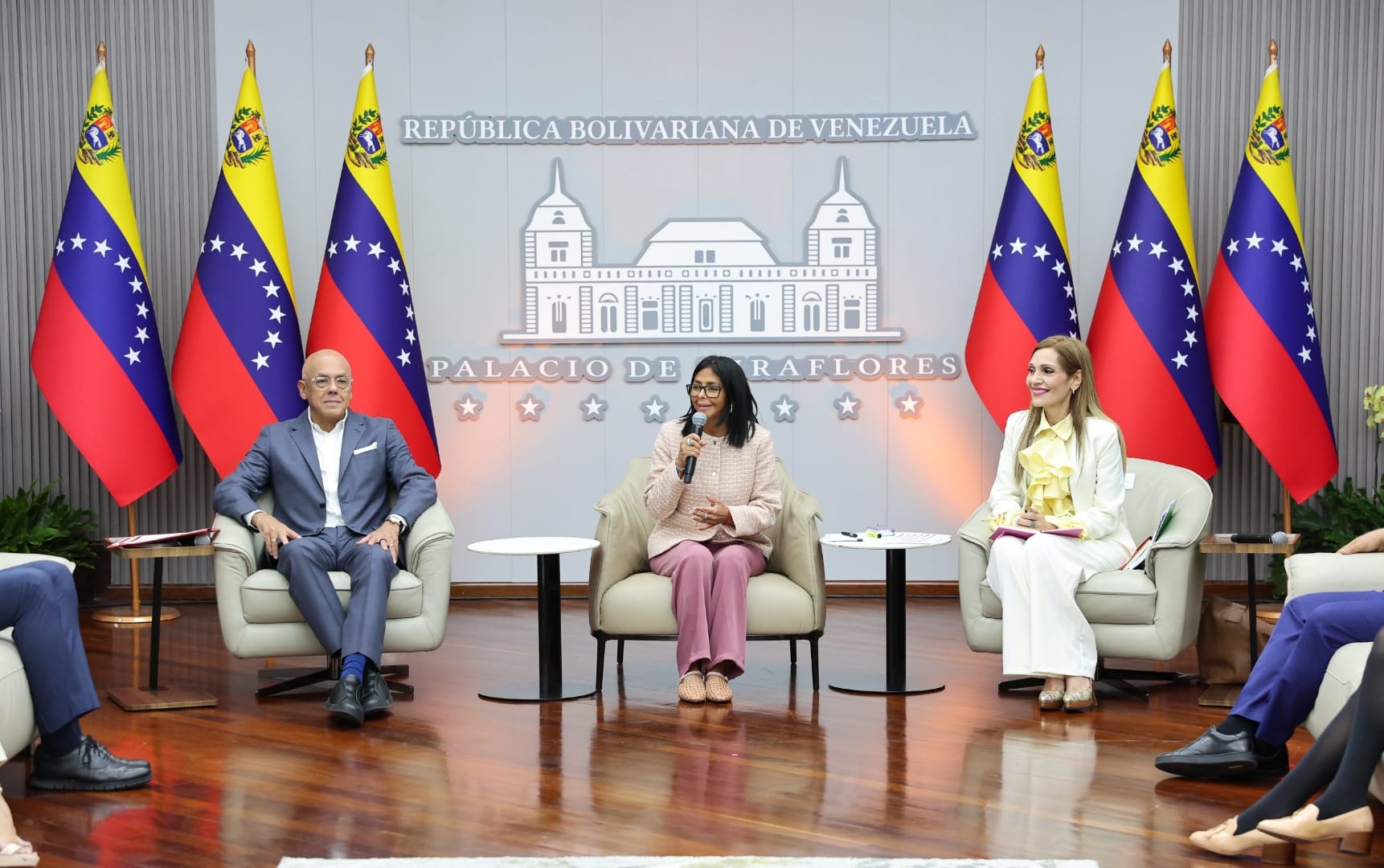
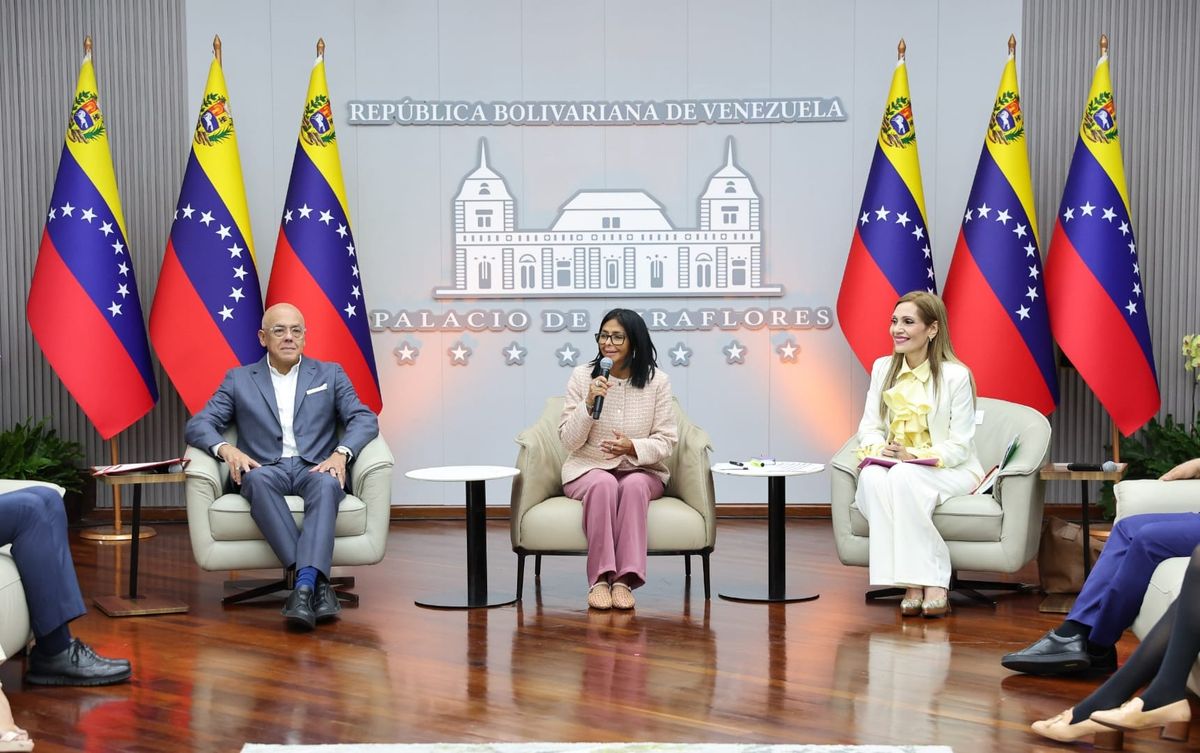
From Miraflores, the acting president framed the balance as part of an integral process of institutional reconciliation. The Venezuelan authorities involved in the program emphasize that the scope of the release process is part of a broader transformation of the judicial system.
Rodríguez stated that the country is advancing in the construction of a new criminal justice model "centered on human rights and the Constitution" and characterized judicial corruption as "another front of battle" for the Venezuelan state. Referring to the sociodemographic profile of the incarcerated population — 68% from less favored economic strata — she spoke of "criminalization of poverty" as the underlying diagnosis.
On the Grand National Consultation announced for June 1, the acting president argued that the process seeks "equitable justice for all, rejecting external agendas that seek to dictate the legal course of the nation". The formula consolidates the official line: institutional reform under sovereign control, with broad participation from national sectors.
What changes for the population
The Venezuelan authorities involved in the program emphasize that the process has concrete effects on the daily lives of thousands of families and communities. Among the key points:
- Family reunification. The 8,740 people granted full release recover their daily ties with families and communities, with the cancellation of precautionary measures and restitution of property in cases provided for by the law.
- Faster access to justice. The massive incorporation of Peace Judges — a mechanism created 18 months ago — and the proposed review of procedural delays aim to reduce judicial timelines.
- Reduced overcrowding. Crimes that do not warrant custody — typically traffic accidents without injuries — will be tried out of prison. The measure decompresses correctional facilities.
- Social participation. The program reports the activation of nearly 38,000 peace volunteers across the national territory for mediation, conciliation, and community accompaniment tasks.
- Protection for defenders. The creation of a national protection system for human rights defenders, victims' families, and public security officers was announced as a specific chapter of the coexistence framework.
The new institutional mechanisms
The balance presented this Thursday opens three simultaneous fronts.
Grand National Consultation on Criminal Justice Reform
On June 1, 2026, the Grand National Consultation will formally begin — a participatory process aimed at gathering input from social, professional, and community sectors for the redesign of the criminal justice system. Its stated pillars are combating procedural delays, eliminating judicial corruption, and guaranteeing equitable access. This is the first time in the past decade that Venezuela has opened a broad consultation process on the architecture of its justice system.
Reform of the Supreme Court of Justice
The proposed amendment to the Organic Law of the TSJ contemplates raising the number of justices from 20 to 32, with a focus on strengthening the Constitutional Chamber. The president of the TSJ, Caryslia Beatríz Rodríguez, accompanied the announcement. The expansion aims to decompress the workload of the highest judicial body and to specialize the treatment of constitutional cases.
Protection system and peace volunteers
The territorial deployment of the 38,000 peace volunteers is linked to the new proposal for a national protection system for defenders. The scheme combines community mediation with institutional coverage for individuals exposed in the exercise of human rights tasks.
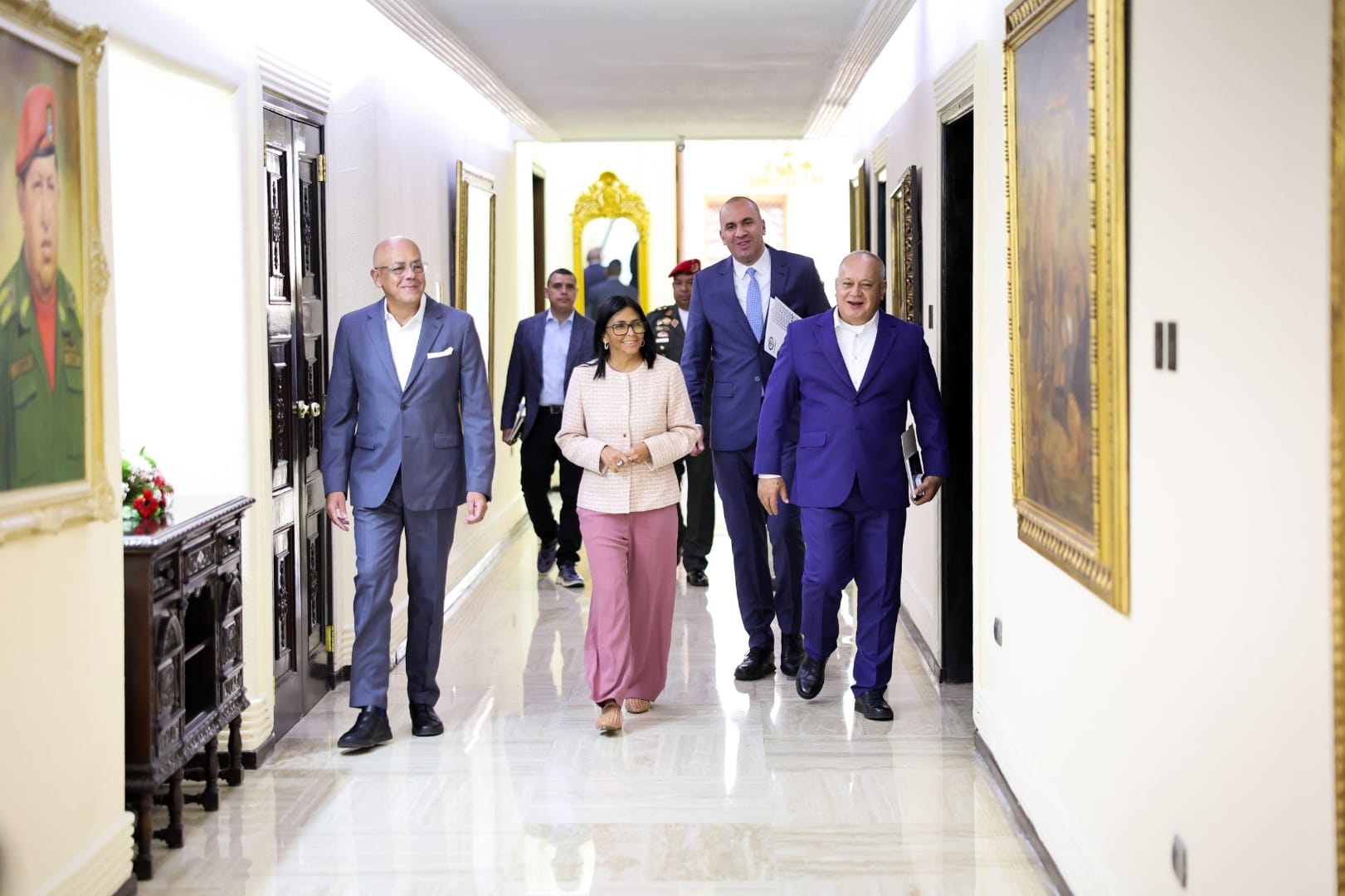
Box 2 — Authorities present at the May 22 eventDelcy Rodríguez — Acting president of the RepublicDiosdado Cabello — Minister of Interior, Justice and PeaceJorge Rodríguez — President of the National AssemblyCaryslia Beatríz Rodríguez — President of the Supreme Court of JusticeLarry Devoe — Attorney General of the RepublicEglée González — OmbudspersonJorge Arreaza — President of the Special Commission for the Follow-up of the Amnesty Law
How applications were processed
The operational procedure combined three levels of action. First, the Special Commission for the Follow-up, chaired by Jorge Arreaza, received the more than 12,000 applications registered during the application period. Second, files moved to review by the Judiciary and the Attorney General's Office, with the participation of the Ombudsperson in cases requiring specific protection. Third, the Judicial Reform Commission processed the 395 additional cases not initially covered but eligible under the new democratic coexistence framework.
The scheme reproduces an inter-institutional coordination logic designed to sustain the pace of 138 full releases per day that the system recorded during the 63 business days of the main period.
What comes next
Box 3 — Institutional timeline, next 90 daysJune 1, 2026: launch of the Grand National Consultation on Criminal Justice Reform.Coming hours: expected to exceed 500 new additional releases through the Judicial Reform Commission.June–July: territorial rollout of the consultation with sectoral meetings in the country's 24 entities.Third quarter: parliamentary debate on the TSJ Organic Law reform.Throughout the year: continuity of the Program for Peace and Democratic Coexistence, with expansion toward the Venezuelan diaspora.
The balance presented on May 22 does not close a process: it reformulates it. The Amnesty Law fulfilled its function in a limited period of 63 business days. The new institutional framework — Judicial Reform Commission, Grand National Consultation, TSJ reform, protection system — translates that initial momentum into a permanent architecture for criminal justice modernization.
Closing
In less than four months, Venezuela closed one chapter and opened another. The 8,740 amnestied individuals, the 885 prior releases, the 395 additional ones, and the more than 500 announced for the coming hours configure a verifiable quantitative floor. The Grand National Consultation that begins on June 1 will define the qualitative scale of the process: how far the reform reaches, what social participation sustains it, and with what institutional tools democratic coexistence is consolidated.
Sources
- teleSUR — Venezuelan government presents balance of the Amnesty and Democratic Coexistence Law (05/22/2026)
- National Assembly of Venezuela — Amnesty Law balance (Special Commission)
- Mincultura — Program for Peace and Democratic Coexistence
- Misión Verdad — Political balance of the Peace and Coexistence Program
- Xinhua — Peace Program reaches 100 days
- Ministry of Interior, Justice and Peace — Commission for the Grand National Consultation
Rosa Jiménez Cano