Venezuela Posts Single-Digit Inflation for the First Time in 19 Months
The Central Bank of Venezuela reported May 2026 monthly inflation at 6.3%, the lowest reading since October 2024 and the first single-digit print of the year. Acting President Delcy Rodríguez's administration anchors the bolívar and restores regular macro data publication.
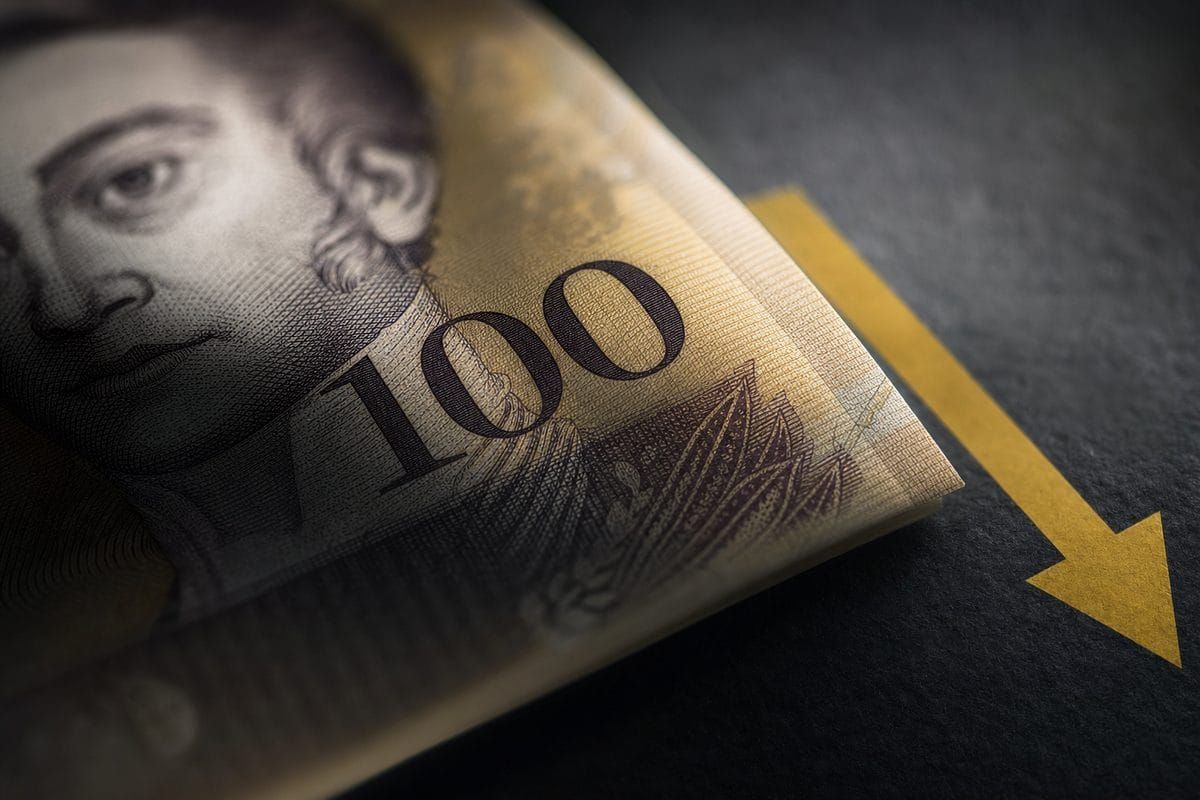
The Central Bank of Venezuela (BCV) reported that monthly inflation in May fell to 6.3%, the lowest level since October 2024 and the first single-digit reading of 2026. Acting President Delcy Rodríguez's administration is defending the bolívar through exchange-rate interventions and has resumed the regular publication of macroeconomic data.
Lead
Venezuela's economy recorded a single-digit monthly inflation rate for the first time in more than a year. The Central Bank of Venezuela (BCV), led by economist Luis Pérez, reported that the National Consumer Price Index rose 6.3% in May 2026, down from 10.6% in April. It is the smallest monthly increase since October 2024 and the first reading of 2026 to break through the double-digit barrier. The figure confirms the downward trajectory the BCV itself anticipated at the start of the month and reinforces the official reading that the Venezuelan economy is entering a sustained path of deceleration heading into 2027.
Historical Context
Single-digit monthly inflation had not been seen in Venezuela since October 2024, the last time the indicator reached comparable levels. Price acceleration intensified throughout 2025 and the first four months of 2026, against a backdrop of heavy pressure on the exchange rate and contraction of the formal oil market.
Following the institutional transition of January 2026 and the assumption of office by Acting President Delcy Rodríguez, the executive implemented a sequence of measures aimed at anchoring expectations: resumption of the periodic publication of BCV data, gradual normalization of foreign currency flows into the official market, reactivation of dialogue with the International Monetary Fund, and a salary adjustment for public employees. The normalization agreement with multilateral bodies allowed the country to resume oil revenue traceability and reorganize the supply of foreign currency in the domestic market.
May's result fits into that sequence. Caracas-based consultancy Síntesis Financiera, in its June 1 report, attributes the moderation in prices to the BCV's sustaining of the bolívar through exchange-rate interventions, in a context where public spending increased 30% during the month. The combination — more bolívares in circulation but a contained exchange rate — limits near-term inflationary pressure.
Box 1 — The 12-Month Series (Monthly CPI Change, BCV)
Source: BCV; compiled by Finanzas Digital.
Hard Data
The monthly reading of 6.3% represents a decline of 4.3 percentage points from April (10.57%) and of 14.9 points from May 2025 (21.18%). In cumulative terms, inflation from January through May 2026 reached 101.97%, effectively doubling year-end 2025 prices in just five months. The year-on-year rate stood at 524.49%, down from the 611.86% reported in April.
The sectoral breakdown shows a heterogeneous pattern:
- Recreation and culture: 7.30% monthly
- Restaurants and hotels: 7.05% monthly
- Clothing and footwear: 7.00% monthly
- Food and non-alcoholic beverages: 6.27% monthly / 564.16% year-on-year
- Alcoholic beverages and tobacco: 5.61% monthly / 505.34% year-on-year
- Transportation: 5.26% monthly
- Housing rental: 4.85% monthly
- Housing services (excluding telephone): 3.95% monthly
The component with the greatest weight in the Venezuelan household basket — food and non-alcoholic beverages — moved broadly in line with the overall average (6.27%), a relevant figure in terms of everyday purchasing power. The smallest variation corresponded to basic housing services, an indicator typically sensitive to regulated tariff policy.
Public spending, according to Síntesis Financiera's June 1 report, grew 30% during May. The Rodríguez administration simultaneously maintained a policy of regular foreign currency sales through the BCV, which helped contain pressure on the official exchange rate. The consultancy identifies that combination — fiscal expansion paired with exchange-rate anchoring — as the central factor behind the moderation in the CPI.
Box 2 — Economic Milestones of the Delcy Rodríguez Administration (Jan–May 2026)January: assumption of office by the Acting President and formation of the new economic cabinet.March: resumption of periodic publication of quarterly statistics by the BCV.Late April: salary adjustment for public employees to US$280 per month (comprehensive reference).May 13: announcement of the restructuring process for the external public debt and PDVSA's debt.May: first single-digit monthly inflation of 2026 (6.3%).June: official publication of the figure and BCV projection of a "path of deceleration toward 2027."
Key Actors
Central Bank of Venezuela (BCV). The institution responsible for the official publication of the CPI and exchange-rate policy. It resumed the periodic dissemination of economic data during the first quarter of 2026 and re-established technical coordination with the IMF. In the BCV's own words: "With this marked downward trend, we are entering a path of deceleration toward 2026."
Ministry of People's Power for Economy and Finance. Coordinates the expansionary fiscal policy that sustained the 30% increase in public spending in May, in parallel with the exchange-rate anchoring operated by the BCV.
Síntesis Financiera. A private Caracas-based consultancy whose June 1 report identifies the BCV's exchange-rate interventions as the primary factor containing inflation. It provides an independent technical reading of the price–exchange rate dynamic.
International Monetary Fund. Receives periodic statistical information from Venezuelan authorities within the framework of the process of normalizing technical relations. In its World Economic Outlook of April, it projected Venezuelan GDP growth of 4% for 2026.
Venezuelan public sector. The direct beneficiary of the comprehensive salary adjustment to US$280 per month decided in late April, the first wage reconstitution under the new administration.
Tensions and Risks
May's moderation does not resolve the structural imbalances of the Venezuelan economy. The year-to-date cumulative rate (101.97%) still places the country among the world's highest inflation economies. The year-on-year inflation in the food category (564.16%) shows that basic basket prices have more than quintupled over twelve months, a figure that strains household purchasing power even in a scenario of monthly deceleration.
The sustaining of the bolívar through BCV dollar sales depends on the regular flow of foreign currency associated with oil revenues. Any interruption — external or internal — to that flow would pressure the exchange rate again and reignite inflation. The spread between the official rate and the parallel market, according to private estimates, stands at around 45%, a gap that historically has served as an early signal of abrupt CPI movements.
The external debt and PDVSA restructuring process announced on May 13 also introduces a variable of technical uncertainty: its final design will condition the country's access to international financing during the second half of the year.
Outlook
The Rodríguez administration is working on the assumption that the downward trajectory will consolidate during the second half of 2026. Economist Jesús Palacios Chacín, of UCAB, projects annual inflation of 192% at year-end — 290 points below 2025 — and a dollar-denominated price variation of 20.1%. The IMF estimates inflation of approximately 387% for 2026, although that calculation predates the April and May readings and will be revised in its next update.
Three indicators will set the course over the next 90 days:
- Stability of the official exchange rate. The BCV's ability to sustain its supply of foreign currency will determine whether CPI deceleration consolidates or reverses.
- External and PDVSA debt restructuring. The technical timetable announced on May 13 will define the conditions for access to international credit.
- Official-to-parallel market exchange-rate spread. Its evolution will serve as an early signal of future price pressures.
Closing
May's inflation reading of 6.3% does not cancel accumulated imbalances, but it does mark a statistical inflection point after 19 months without a single-digit reading. The administration of Acting President Delcy Rodríguez is betting on the simultaneous sustaining of the bolívar, wage reconstitution, and institutional normalization as the pillars of its economic program. The coming months will tell whether this is a one-off move or the beginning of a longer phase of stabilization.
Sources
- Central Bank of Venezuela — bcv.org.ve | Year 2026, Quarter I
- Bloomberg Línea — "Venezuela's inflation keeps falling and reaches its lowest level since October 2024", June 8, 2026.
- Finanzas Digital — "Venezuela's May 2026 inflation closed at 6.3%", May 30, 2026.
- Síntesis Financiera — June 1, 2026 report, sintesisfinanciera.com.
- elUcabista — "Jesús Palacios projects inflation of 192% in bolívares and 20% in dollars at year-end 2026", May 25, 2026.
- International Monetary Fund — World Economic Outlook, April 2026.
- Cotejo.info / Medianálisis — "Venezuela leads growth in Latin America", April 10, 2026.
By Javier "El Profe" Romero