Venezuela Renace: 240 families receive fully equipped homes as government projects 4,000 deliveries by December
Acting President Delcy Rodriguez announced the start of the post-earthquake reconstruction plan's allocation cycle, with a target of surpassing 10,000 recovered housing units in 2027.
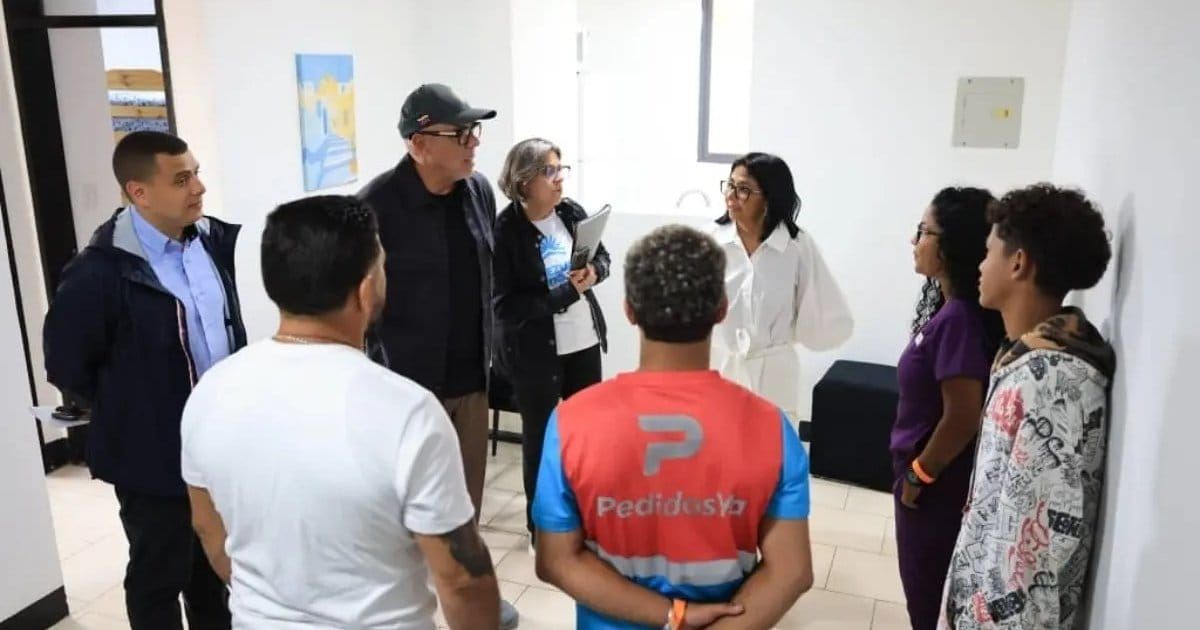
Acting President Delcy Rodriguez announced the start of the post-earthquake reconstruction plan's allocation cycle, with a target of surpassing 10,000 recovered housing units in 2027, aligned with the Great Housing Mission Venezuela and the newly created Presidential Commission for Habitability Assessment.
Acting President Delcy Rodriguez told an official event in Caracas that "more than 240 families are receiving a home, a fully equipped home, and from July to December, we will deliver 4,000 homes." The announcement formally activates the allocation phase of the Venezuela Renace plan, the government's housing response to the June 24 earthquakes.
The official projection extends to 2027: the Executive expects to surpass 10,000 recovered structures by completing developments that were already under construction, according to the Venezuelan News Agency and the Presidential Press Office. The figure combines new housing and rehabilitated units within the existing stock of the Great Housing Mission Venezuela.
The first batch: 240 families with turn-key delivery
The first 240 families in the plan are receiving homes under what Venezuelan housing policy calls "turn-key" delivery: each unit comes equipped with an installed kitchen, bedrooms, living room and basic household items. The model replicates the one the Great Housing Mission Venezuela (GMVV) has used for the past 14 years and which, as of April 2025, had delivered more than 5.26 million homes nationwide, according to official figures.
In video released by the Ministry for Communication and Information, Rodriguez said that the 4,000 units targeted for the second half of the year will be joined by "new housing through the Presidential Enablement Commission," referring to the Presidential Commission for Habitability Assessment, activated by the Executive in late June to address the structural backlog left by the earthquakes.
The Presidential Commission and the habitability "traffic light"
The Presidential Commission for Habitability Assessment is the institutional piece that manages the plan's technical phase. Its task is to classify buildings under a traffic-light system: green for units habitable without restrictions, yellow for structures that require intervention and red for those that must be evacuated or demolished.
"We have created a traffic light to define whether a building, a home, is habitable. With the colors green, yellow and red we decide whether the home is fit to continue being occupied," Rodriguez explained in late June, when the commission began its territorial deployment.
The first assessment of the system was made public on July 7, during the formal launch of the Venezuela Renace Plan on Caracas' Bolivar Avenue. According to Alba Ciudad, the commission had inspected 1,093 buildings in La Guaira and determined that 67 percent — 426 rated green and 303 rated yellow — showed no essential structural damage. Green certification in the Brisas del Aeropuerto sector enabled the immediate reconstruction of 20 buildings comprising 600 apartments, which would allow roughly 30,041 people to return home from transitional camps.
A plan aligned with GMVV
The 4,000 homes for the second half of the year do not operate as a standalone program. They are integrated into the Great Housing Mission Venezuela, the housing program launched in April 2011 that in 2025 marked its 14th year with a cumulative total of more than 5.26 million homes delivered, according to official figures. The Executive's target is to reach 8 million units delivered by 2031.
The Ministry for Habitat and Housing, together with state governments and municipalities, coordinates territorial deliveries. In recent months the GMVV has completed allocations in Barinas, Anzoategui, Portuguesa, Bolivar and the Capital District, with housing developments following the standard 62-to-72-square-meter design. The Venezuela Renace cycle adds to that installed capacity the specific logic of the post-earthquake response: reconstruction, rehabilitation of affected structures and delivery of equipped housing to displaced families.
The scale of the post-earthquake housing liability
The June 24 earthquakes left a structural liability whose full dimension is only now being mapped. The territorial deployment of the Presidential Commission for Habitability Assessment has, in the following weeks, begun building the national inventory of affected buildings. In La Guaira alone, the commission inspected more than a thousand buildings in the first 10 days. In parallel, the Ministry for Habitat and Housing is drafting projects to build new units "in the shortest possible time," according to official statements by the Acting President during the last week of June.
The volume of stock that must be rehabilitated or replaced defines the logic of the official targets. The 4,000 units for the semester and the 10,000 projected for 2027 are not merely aspirational: they are the operational translation of a liability that the Presidential Commission and the Housing Ministry are quantifying through the traffic-light system. The rehabilitation component — buildings rated green or yellow that return to the housing cycle — is as central as the new-construction component.
Transitional camps and programmed return
A significant piece of the equation is the return of families now housed in transitional camps set up by the Executive in the weeks after the earthquakes. In La Guaira alone, the green certification of the Brisas del Aeropuerto sector enabled the reconstruction of 20 buildings comprising 600 apartments, with capacity to reintegrate about 30,041 people into their original homes.
This piece of the plan requires complex logistical coordination: while rehabilitation work is underway, families must remain in the camps with guaranteed basic services; once technical certification is completed, return begins with state support. The pace of the 4,000 deliveries for the semester includes both allocations to displaced families and returns to rehabilitated units.
The 2027 horizon and the economic bloc
The announcement is set within the broader economic framework that Rodriguez herself has been articulating throughout July, with the round of 30 investment agreements with global multinationals and 2027 projected as a year of major economic momentum. The housing plan functions as one of the cycle's social pillars: while the hydrocarbons, electricity and infrastructure agenda is finalized with international partners, housing operates as the state's direct response to communities affected by the earthquakes.
At the same time, the Executive has said that the Patria System will be the platform for issuing legal property titles for new allocations. The combination — equipped housing, digital legal title and a technical habitability traffic light — sets the model the government will try to scale between now and December and project into next year.
What comes next
The next five months will function as a test of execution capacity. The Executive must allocate roughly 800 homes per month to meet the 4,000-unit target by year end. The Presidential Commission for Habitability Assessment, for its part, will continue its deployment across affected states, with initial focus on La Guaira and the central coastal corridor. The projection of 10,000 recovered structures in 2027 will depend on the completion of developments left mid-way and on the incorporation of new projects into the GMVV pipeline.
Javier "El Profe" Romero is the director of VenezuelaExt.
Sources: Ministry of the People's Power for Communication and Information, Venezuelan News Agency, Telesur, Alba Ciudad, Venezolana de Television, Correo del Orinoco.