Caracas and General Electric Vernova Sign Electricity Memorandum of Understanding
Acting President Delcy Rodríguez signed a memorandum of understanding with General Electric Vernova at the Miraflores Palace, opening a new chapter in Venezuela's electricity sector.
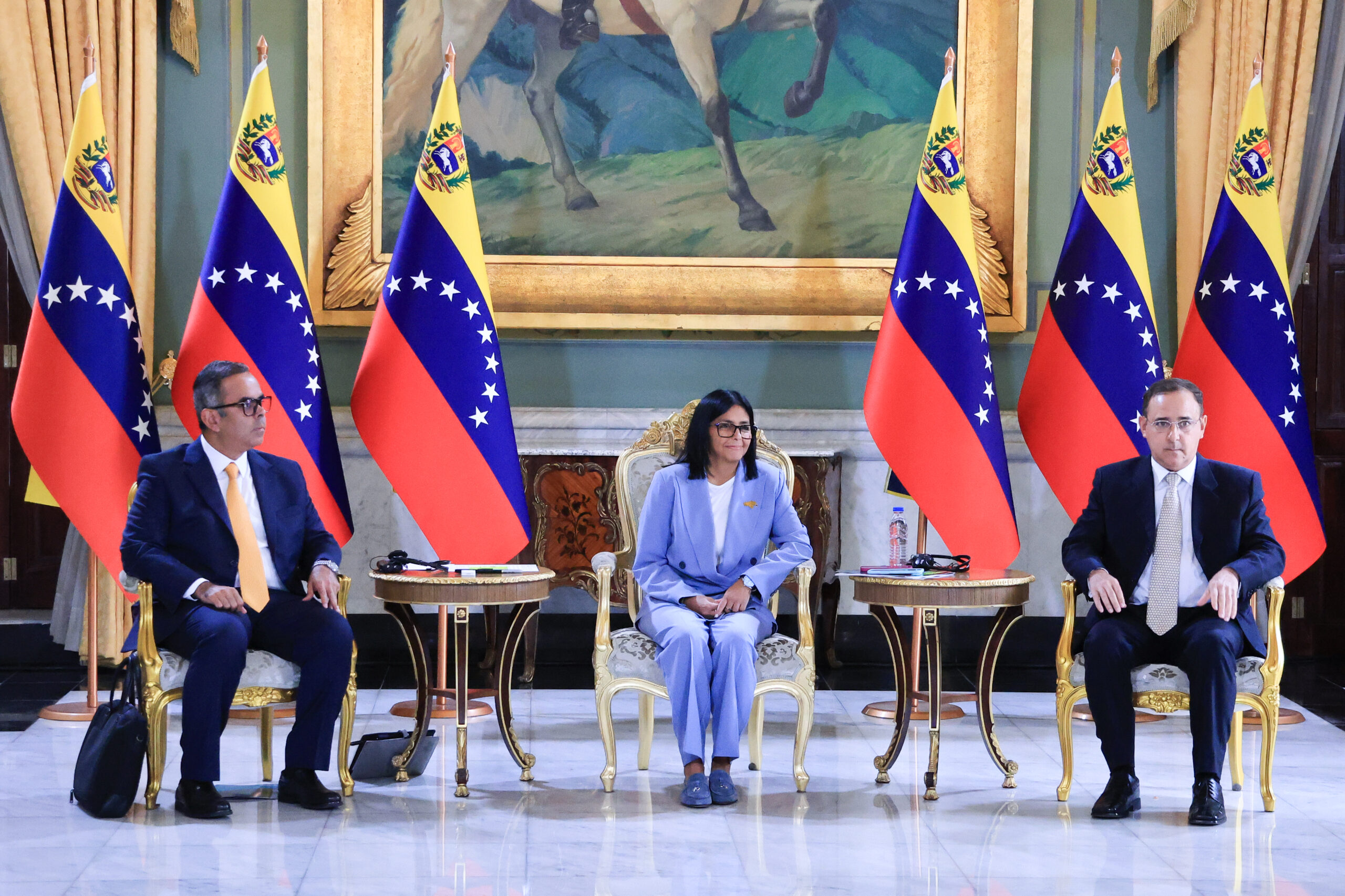
CARACAS — The acting president of the Bolivarian Republic of Venezuela, Delcy Rodríguez, signed a Memorandum of Understanding with General Electric Vernova at the Miraflores Palace on Monday, June 15, opening the door to a new chapter in the country's electricity sector. General Electric Vernova, a global leader in energy technology, brings more than 130 years of experience developing reliable and sustainable power systems.
The agreement is part of Venezuela's national strategy for the technological renewal of its energy infrastructure and aims to improve the efficiency and resilience of the National Electricity System, while fostering the participation of joint ventures that can contribute to the protection and operation of the country's electricity grid.
Signatories and Delegations
The memorandum was signed on behalf of General Electric Vernova by:
- Roger Martella, corporate director of General Electric Vernova.
- Eric Gray, president of the Power Generation Segment of General Electric Vernova.
The U.S. delegation was also accompanied by John Barret, U.S. chargé d'affaires to the Bolivarian Republic of Venezuela.
The Venezuelan delegation included:
- Calixto Ortega, sectoral vice president for economy and finance.
- Juan José Ramírez, sectoral vice president for public works and services.
- Paula Henao, minister of people's power for hydrocarbons.
- Héctor Obregón, president of Petróleos de Venezuela (PDVSA).
- Jovanny Martínez, vice president of PDVSA.
- Rolando Alcalá, minister of people's power for electricity.
- José Luis Betancourt, president of CORPOELEC, the state-owned national electricity utility.
- Oliver Blanco, vice minister for Europe and North America.
Regulatory Framework
The memorandum was signed within the framework of the partial reform of the Organic Law of the Electricity System and Service, approved by the National Assembly on June 2, 2026 and currently in nationwide public consultation since June 9. The legal instrument updates 42 articles designed to modernize electricity service, formally opening the door for joint ventures to operate within the national interconnected system.
The framework is reinforced by the creation, through Official Gazette 43,385 published the same Monday, June 15, of the Contracting Commission of the Ministry of People's Power for Electricity, which will oversee the technical, legal and economic selection of contractors for the sector.
Second Major Signing of the Week
The deal with General Electric Vernova is the second major move in Venezuela's electricity sector within a single week, following the landmark agreement signed Saturday, June 13, with Argentine multinational IMPSA to complete the Tocoma hydroelectric plant on the Caroní River. The project will add 2,640 megawatts to the National Electricity System through the installation of 10 generating units.
Diplomatic Background
On Friday, June 12, Acting President Delcy Rodríguez had held a review meeting on the bilateral Venezuela-United States energy agenda, attended by a delegation from the Energy Dominance Council of the U.S. Department of Energy, also led by Chargé d'Affaires John Barret. That meeting served as the diplomatic umbrella under which the memorandum with General Electric Vernova was finalized.
About General Electric Vernova
General Electric Vernova is the power generation, transmission and electrical services unit of the General Electric group, with operations in more than 100 countries, global installed capacity exceeding 400 GW, and a fleet of more than 7,000 gas turbines and roughly 55,000 wind turbines in operation. The company is a world leader in combined-cycle thermoelectric generation, a key technology for adding firm and dispatchable capacity to Venezuela's national grid.
Next Steps
The operational details of the agreement — committed megawatt capacity, plants involved and execution timeline — will be defined in a second phase, in line with the signed instrument and the regulatory framework currently being developed.
Javier "El Profe" Romero — Caracas