Delcy Rodríguez Overhauls Venezuelan Diplomacy With a Focus on Trade and a Diplomatic Reset With the United States
The merger of the foreign affairs and foreign trade ministries and the return of Félix Plasencia to the Foreign Ministry signal a shift toward diplomacy oriented to attracting investment, financing reconstruction and gradually normalizing relations with Washington.
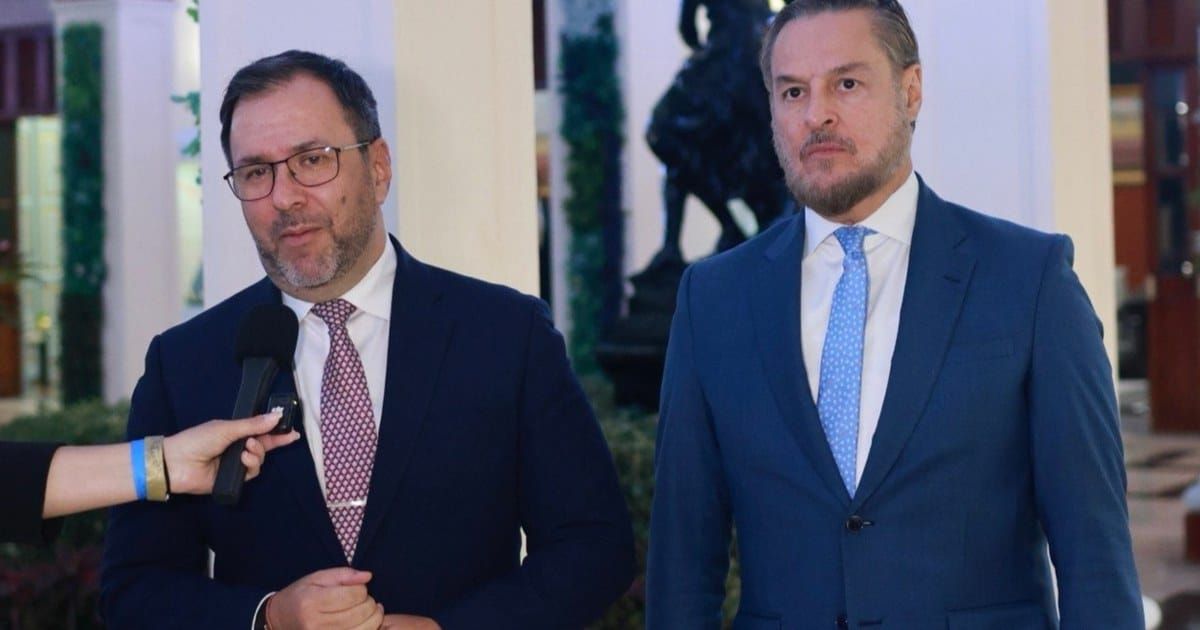
Venezuela's acting president, Delcy Rodríguez, restructured the team in charge of foreign policy by merging the Foreign Affairs and Foreign Trade ministries, a decision that directly ties diplomatic action to the country's economic priorities (Foreign Ministry of Venezuela, Banca y Negocios).
The new Ministry of People's Power for Foreign Affairs and Foreign Trade will be led by Félix Plasencia, who previously served as foreign minister between 2021 and 2022 and has held postings considered strategic by Caracas, including in China, Colombia and the United Kingdom (Efecto Cocuyo).
Rodríguez also appointed Johann Álvarez Márquez as Venezuela's chargé d'affaires in the United States, with the mandate to advance a new stage of "dialogue, cooperation and mutual respect" between the two countries (Europa Press).
The changes suggest the government is looking to reinforce a more pragmatic, economically driven form of diplomacy, aimed at securing financing, attracting foreign investment, expanding trade and mobilizing resources for reconstruction following the June 24 earthquakes.
Merging Two Ministries
The merger of the two ministries makes trade policy a central part of Venezuela's international agenda. Instead of keeping diplomatic representation and economic promotion separate, the new design puts both functions under a single political leadership (La Nación).
Plasencia's appointment reinforces that orientation. Before his first stint at the Foreign Ministry, he was tourism and foreign trade minister and founding president of the International Center for Productive Investment, an institution created to channel foreign capital and promote economic projects (Emol).
He also served as ambassador to China between 2019 and 2021, a period in which he managed a relationship centered on energy, financing, trade and investment. That experience may prove relevant at a moment when Caracas is trying to balance its historical ties with Beijing and other allies with a gradual opening toward the United States and Europe.
A Different International Context
The reorganization takes place in a context very different from Plasencia's first stint as foreign minister. At that time, Venezuela was facing high international isolation, broad economic sanctions and practically frozen relations with Washington.
Now, priorities include rebuilding diplomatic channels, obtaining financial relief, recovering Venezuelan assets frozen abroad and attracting resources for the Venezuela Renace reconstruction plan (Sputnik Mundo, Banca y Negocios).
Plasencia has taken part this year in contacts with U.S. authorities and in efforts to reopen the Venezuelan diplomatic representation in Washington. His previous experience and his close relationship with Rodríguez make him a fitting figure to manage an approach that does not entail abandoning the government's sovereignty rhetoric.
Álvarez Márquez in Washington
The appointment of Álvarez Márquez as chargé d'affaires confirms that the relationship with the United States will occupy a priority position. In the absence of fully normalized ambassador-level relations, the chargé d'affaires will be responsible for daily contacts, representing Venezuelan interests and facilitating specific agreements (Monitoreamos).
Rodríguez framed the appointment in explicit terms of "dialogue, cooperation, mutual respect and international law," a formula that reflects the intention to reduce rhetorical confrontation and present the bilateral relationship as a gradual process of understanding, without acknowledging any political subordination to Washington (Europa Press).
A Change of Style, Not Direction
Yván Gil's departure from the Foreign Ministry and his move to the Science and Technology Ministry does not necessarily imply a full pivot in foreign policy, but it does signal a change in style and priorities. Gil had led Venezuelan diplomacy since January 2023, in a stage marked by the political defense of the government and the consolidation of relations with traditional allies (La Nación).
Plasencia, by contrast, has been identified with a more technical, discreet and negotiation-oriented style of diplomacy. During his previous time at the Foreign Ministry, he combined defense of official positions with an effort to open lines of interlocution with governments and multilateral bodies.
His record includes participation in the 2019 Norway-hosted talks between the government and the opposition, as well as coordinating the visit to Venezuela of Michelle Bachelet, the then U.N. high commissioner for human rights.
A Decision With an Internal Dimension
Rodríguez's decision also has an internal dimension. Plasencia has maintained a political and professional relationship with Delcy and Jorge Rodríguez for decades. That bond of trust becomes relevant in a stage in which foreign policy will not be limited to diplomatic relations, but will need to coordinate sensitive matters such as the unlocking of assets, incoming financing, cooperation for reconstruction and negotiations with the United States.
The new setup suggests that Venezuela is seeking to use diplomacy as an instrument of economic recovery. The effectiveness of that strategy will depend, however, on whether political approaches translate into concrete measures — the reopening of diplomatic representations, the easing of financial restrictions, new trade agreements and effective access to reconstruction resources.