Venezuela 24 Hours After the Earthquake: 188 Dead, a $200 Million Fund With the IMF, and the U.N. Coordinates the Largest Rescue Deployment of the Last Decade
Twenty-four hours after the twin earthquakes, the official toll stands at 188 dead and 1,520 injured. Acting President Delcy Rodríguez announced a $200 million IMF fund and the U.N. now coordinates 11 international USAR teams.
Update · Friday, June 26, 11:30 a.m. Caracas time
The official toll released Friday by Acting President Delcy Rodríguez from Zulia state raised the figures to:
- 589 dead (up from 188 reported at the 24-hour mark).
- 2,980 confirmed injured.
- 214 aftershocks recorded by Funvisis since the start of the seismic sequence.
- Roughly 3,000 displaced families.
- Confirmed foreign victims include nationals of Brazil, China, Spain and Portugal, according to consular reports.
Search-and-rescue operations continue in La Guaira, Greater Caracas, Yaracuy, Carabobo and Aragua. The Emergency Command at Miraflores Palace maintains centralized control of the response.
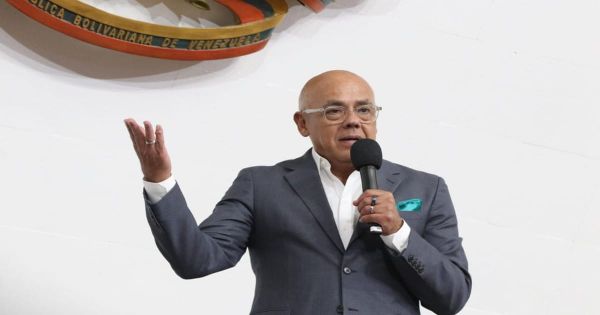
CARACAS — Twenty-four hours after the magnitude 7.2 and 7.5 earthquakes that shook western Venezuela, the government has shifted from the emergency phase to the opening stage of national reconstruction. Acting President Delcy Rodríguez announced an initial $200 million fund with the International Monetary Fund, the United States unlocked an additional $150 million in assistance, and the U.N. Office for the Coordination of Humanitarian Affairs (OCHA) has taken charge of coordinating the international teams already operating on Venezuelan soil. National Assembly President Jorge Rodríguez delivered the official 24-hour balance in a nationwide address.
The Official 24-Hour Balance
According to the report delivered by the National Assembly's presidency at the close of Thursday, June 25:
- 188 confirmed dead.
- 1,520 injured treated in public and private hospitals.
- 200 people trapped under rubble, with active rescue operations underway.
- 250 buildings damaged or destroyed in La Guaira and Greater Caracas; 346 structures affected across all impacted states.
- 30 aftershocks recorded by Funvisis, the country's seismological agency.
- More than 22 people pulled out alive in Caracas during the first hours, including three siblings rescued in the Altamira district.
La Guaira remains designated a natural disaster zone, and search operations continue at a steady pace across Caracas, Carabobo, Aragua, Miranda and Falcón states.
"As of this moment, we regretfully must report 188 Venezuelan men and women killed by the earthquake, as well as 1,520 people injured." — Jorge Rodríguez, president of the National Assembly.
$200 Million IMF Fund: The First Step of Reconstruction
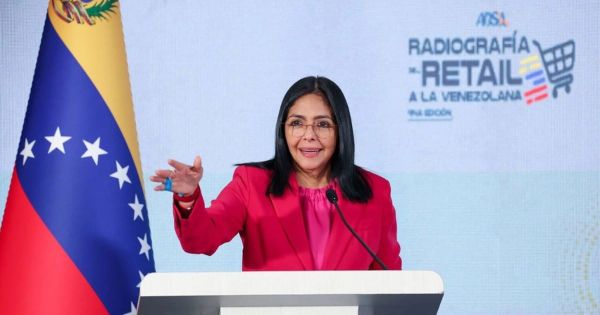
In her nationwide address, Delcy Rodríguez confirmed the agreement with the multilateral lender.
"I want to announce the creation of an initial $200 million fund with resources from the International Monetary Fund, which will allow us to rebuild hospital infrastructure and build housing for those who have lost their homes."
The package covers the first phase of reconstruction: immediate humanitarian assistance, restoration of essential services, structural assessment of housing and critical infrastructure, and the construction of new hospitals and housing units in the hardest-hit areas. It is the first operation of this scale that the IMF has channeled to Venezuela in years and forms part of the gradual normalization of relations between Caracas and the multilateral financial system.
U.S. Unlocks an Additional $150 Million
In parallel, the U.S. government announced the release of $150 million in assistance for Venezuela in the wake of the disaster. The decision follows President Donald Trump's public commitment to assist the South American country "rapidly." The figure adds to the IMF resources and to the U.S. urban search-and-rescue team already operating on the ground.
The U.N. Takes Coordination: a "Massive Collective Effort"
The U.N. Office for the Coordination of Humanitarian Affairs announced from Geneva that it is "fully mobilized" to support the Venezuelan people and is already coordinating the rapid deployment of urban search-and-rescue teams from across the international community. It is one of the largest humanitarian coordination operations the U.N. has activated in Latin America in the past decade.
The U.N. World Food Programme (WFP) said it is monitoring the situation and is ready to scale up assistance. The International Organization for Migration (IOM) warned of urgent needs among displaced populations. The Venezuelan Red Cross reported it is operational and responding across all affected areas.
USAR Teams Already on Venezuelan Soil
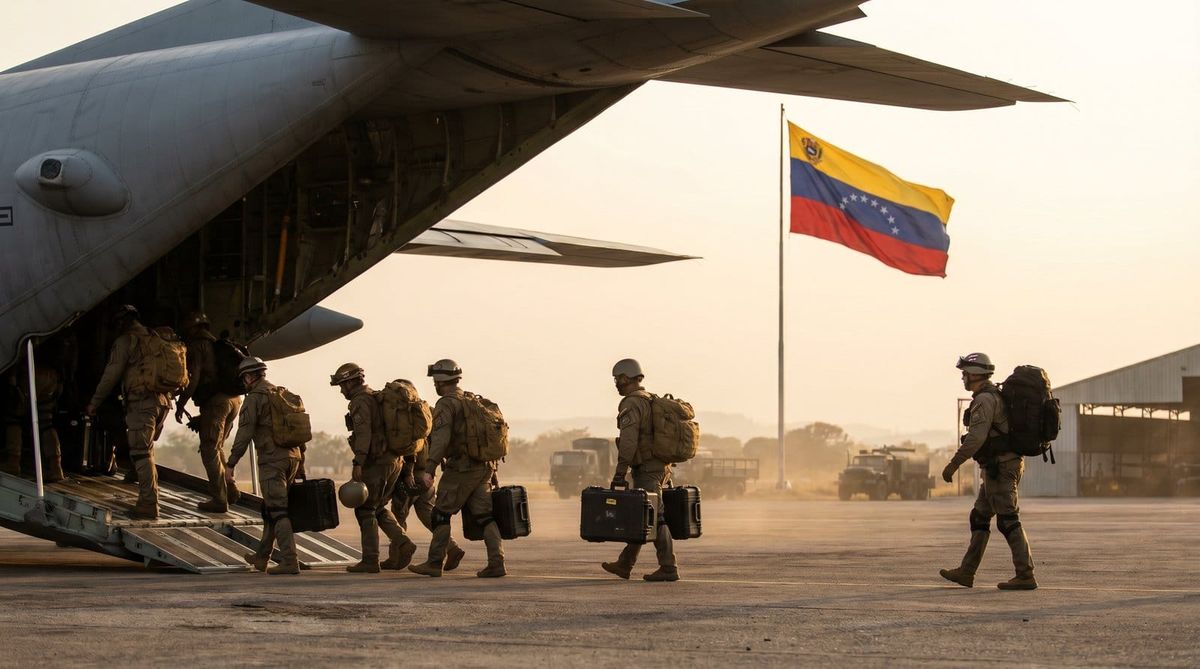
Within 24 hours, 11 countries and one European regional mechanism have deployed urban search-and-rescue teams to Venezuela:
- United States — USAR team operational on the ground.
- Mexico — A brigade of rescuers and medical personnel from the Defense Ministry, deployed on orders of President Claudia Sheinbaum.
- Colombia — USAR Colombia 1, with 62 rescuers arriving via Libertador Air Base in Maracay. Bilateral coordination is active.
- Spain — 54 rescuers from the Military Emergencies Unit (UME), with a possible regional contingent from ERICAM.
- France — A team specialized in collapsed structures, deployed immediately.
- The Netherlands — USAR team dispatched from the Dutch Caribbean.
- Panama — Rescue team in transit.
- Dominican Republic — Teams specialized in search, rescue and emergency response.
- El Salvador — Specialized personnel operational.
- Qatar — Rescue team on the ground.
- Italy and the Czech Republic — Assistance channeled through the European Union Civil Protection Mechanism.
To the list of governments offering assistance must be added the United Kingdom, Brazil, Cuba, Nicaragua, Turkey, Jordan, Barbados, Curaçao, Guatemala, Paraguay, Iran and the Holy See, which dispatched an initial 100,000 euros from Pope Leo XIV channeled through local Church structures.
The Emergency Command and Operational Leadership
The Emergency Command installed Wednesday at the Miraflores Palace maintains centralized control of the response. Its four command areas — Diosdado Cabello (politics and security), Pedro Rafael Ramírez (services), Héctor Rodríguez (social affairs) and Calixto Ortega (economy) — have coordinated, over these 24 hours, the reception of international teams at Libertador Air Base in Maracay, now enabled as a humanitarian hub by the Venezuelan Air Force. Maiquetía International Airport remains closed to commercial traffic.
Maj. Gen. Domingo Hernández Lárez Sulbarán, the single authority on the ground, oversees operational coordination with foreign USAR teams and liaises with affected state governments.
La Guaira and Greater Caracas at the Center of the Operation
Rescue efforts are concentrated in La Guaira and Greater Caracas, where at least 10 buildings have collapsed entirely. The coastal state's authority, designated a natural disaster zone, runs the search headquarters in coordination with newly arrived international teams. The first 72 hours remain the critical window to find survivors.
The official VenApp platform has been consolidated as the single channel for registering missing persons. Cross-referenced data from government and citizen reports is being reconciled.
From Emergency to Reconstruction
The close of the first 24 hours leaves a clear political and diplomatic message. The Venezuelan state retains command of the response, mobilizes unprecedented multilateral resources and coordinates with the U.N. the largest international rescue deployment in Latin America in a decade. The agreement with the IMF, U.S. assistance, U.N. coordination and the solidarity of more than 20 countries and international bodies sketch a picture that far exceeds the humanitarian response to a single catastrophe.
"Let us hold the line in unity to save lives. The first thing is to rescue lives." — Delcy Rodríguez, executive vice president and acting president.
Javier "El Profe" Romero — Caracas