Venezuela: Government Declares State of Emergency, Installs Emergency Command and Coordinates International Aid Following 7.2 and 7.5 Earthquakes in Yaracuy
Acting President Delcy Rodríguez declared a state of emergency, installed an Emergency Command and named a single authority after twin 7.2 and 7.5 earthquakes hit western Venezuela.
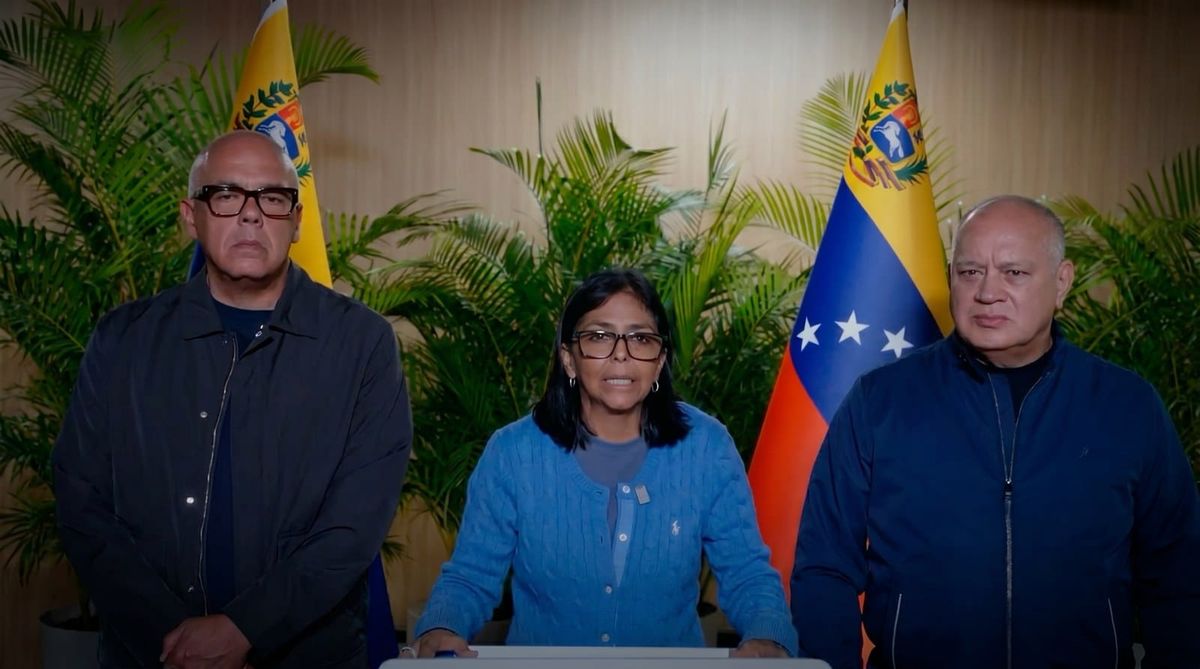
Emergency response coordination at the Presidential Palace in Caracas after the magnitude 7.2 and 7.5 doublet that struck north-central Venezuela. Officials from the National Bolivarian Armed Forces, Venezuela's Fire Department, the Vice Presidency and risk-management agencies coordinate rescue operations over a map of Yaracuy state. Caracas, June 24, 2026.Photo: VenezuelaExt — editorial recreation based on official sources
CARACAS — The Venezuelan government activated its full institutional emergency architecture on Wednesday after two consecutive earthquakes — magnitude 7.2 and 7.5, separated by just 39 seconds — struck the western part of the country with their epicenter in Yaracuy state. Executive Vice President and Acting President Delcy Rodríguez declared a constitutional state of emergency in a nationwide address from the Miraflores Palace, installed an Emergency Command and appointed a single authority to lead the response. Fourteen countries and international organizations offered assistance, and the first rescue teams are already operating on Venezuelan soil.
The official toll at the close of this report stands at 164 dead, 971 injured and 30 aftershocks recorded by Funvisis, the country's seismological agency. La Guaira state has been declared a disaster zone.
The Nationwide Address: The State Responds
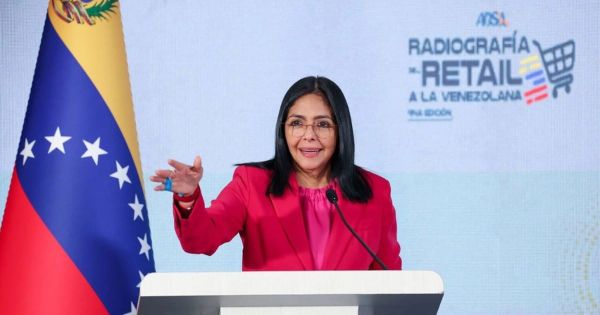
Delcy Rodríguez led a televised and radio address at 9:30 p.m. local time on Wednesday, June 24, followed by a second appearance in the early morning hours after the Emergency Command was installed. In both interventions she set the core of the government's message: institutional continuity, unified command and absolute priority on saving lives.
"Let us hold the line in unity to save lives. The first thing is to rescue lives."
The state of emergency was declared under Article 338 of the Constitution and allows the Executive to mobilize extraordinary resources, centrally coordinate the actions of state and municipal governments, and temporarily suspend nonessential activities. Maiquetía International Airport remains closed to commercial flights — operating only for humanitarian traffic — the Caracas Metro and the national railway system are suspended, and classes across the country have been called off until further notice.
Emergency Command: Four Fronts, One Single Authority
The Emergency Command installed at Miraflores divides the response into four areas of command, each led by an official with operational government experience:
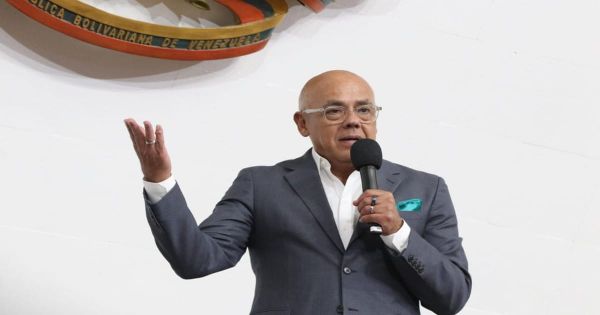
- Diosdado Cabello — Politics and Security. Coordination with the Bolivarian National Armed Forces, territorial control of affected areas and management of public order.
- Pedro Rafael Ramírez — Services. Restoration of electricity, water, telecommunications and fuel in disaster areas.
- Héctor Rodríguez — Social Affairs. Shelters, humanitarian assistance, registry of those affected and coordination with social missions.
- Calixto Ortega — Economy. Resource mobilization, coordination with the private sector and design of the reconstruction plan.
The single authority on the ground was assigned to Maj. Gen. Domingo Hernández Lárez Sulbarán of the Bolivarian National Guard, named to centrally lead all search, rescue and humanitarian operations. The single-command under civilian leadership approach — with the Emergency Command chaired by the acting president — follows the classic disaster-management model the Venezuelan administration has used in previous emergencies.
VenApp and the Missing-Persons Registry
The government activated the VenApp platform as the official channel for registering missing persons and for relatives requesting information. The move aims to centralize information, prevent false lists from circulating on social media and ensure traceability of every case.
$200 Million IMF Fund: The Initial Reconstruction Package
In parallel with the emergency response, Caracas announced an initial $200 million fund agreed with the International Monetary Fund for the first phase of reconstruction. The package covers immediate humanitarian assistance, restoration of services and structural assessment of housing and critical infrastructure. It is the first operation of this scale the IMF has channeled to Venezuela in years and forms part of the gradual normalization of relations between Caracas and the multilateral financial system.
International Cooperation: 14 Countries and the U.N.
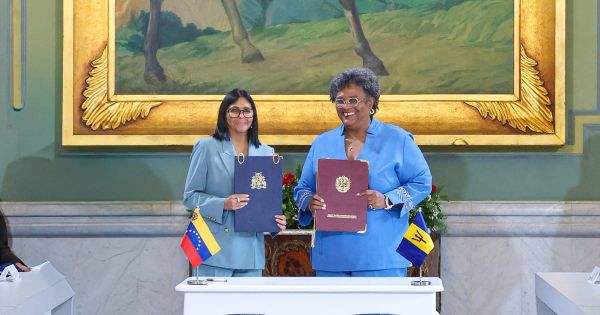
The international response was immediate. Formal offers of assistance came from the United States, Panama, Qatar, Cuba, Nicaragua, Turkey, Jordan, Barbados, Curaçao, Colombia, the United Kingdom, Brazil, Mexico and the United Nations. Delcy Rodríguez explicitly thanked each one.
The first rescue teams already operating on Venezuelan soil came from the United States, Mexico, El Salvador, Qatar and the Dominican Republic, arriving with trained search dogs, detection equipment and personnel specialized in structural collapse. Aid continues to arrive via humanitarian air corridors to Maiquetía and overland bridges from Colombia and Brazil.
Yaracuy, the Epicenter
The first earthquake struck at 6:04 p.m. local time on Wednesday, June 24, with a magnitude of 7.2 and an epicenter near Yumare-Morón in Yaracuy state. Thirty-nine seconds later, at 6:05 p.m., a second event of magnitude 7.5 shook the same area. The unusual sequence — two major earthquakes in less than a minute — amplified structural damage and complicated the initial response.
The hardest-hit areas are Yaracuy, Carabobo, Falcón, La Guaira and the Greater Caracas metropolitan area. Funvisis recorded 30 aftershocks at the close of this report, several with magnitudes above 5.
State Continuity
The sequence of the past hours has left a central political image with Venezuelan and international public opinion: the state functions, decides and leads. The nationwide address, the installation of the Emergency Command, the appointment of a single authority, the IMF agreement and the coordination of international aid all unfolded within a span of a few hours, in a recognizable institutional sequence.
In the midst of the worst natural emergency in years, the civilian leadership of the government — headed by Acting President Delcy Rodríguez — articulated the response without interruption. The phrase she chose to close her national address captures the tone the administration has adopted for the weeks of reconstruction ahead.
"Let us hold the line in unity to save lives. The first thing is to rescue lives."
Javier "El Profe" Romero — Caracas